
Loadings on Steel Structures
Loadings on Steel Structures:
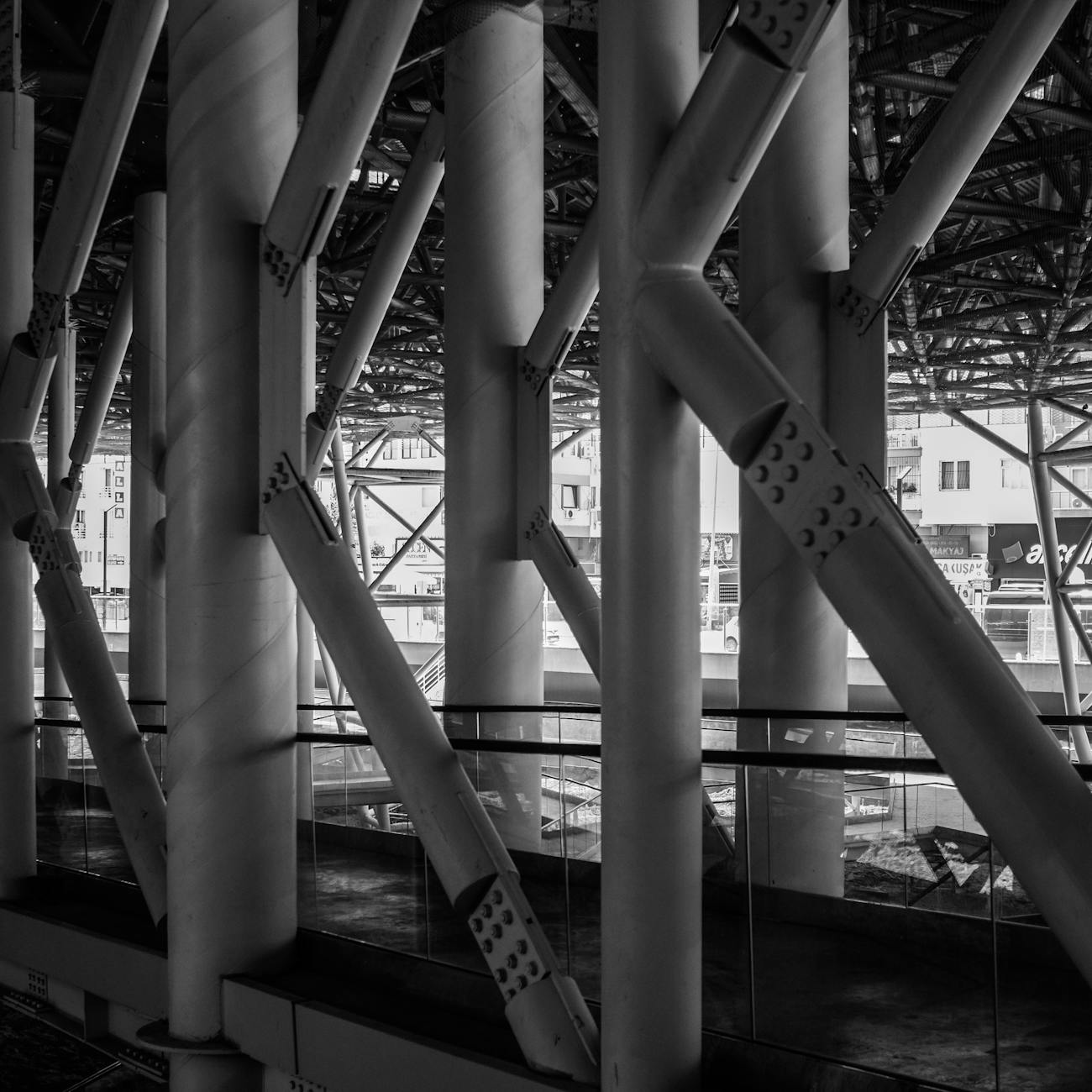
Loadings on Steel Structures:
Loadings on steel structures are crucial considerations in structural steel design. Understanding various types of loads and their effects on steel structures is fundamental for ensuring safety, stability, and functionality. In this course, we delve into the key terms and vocabulary related to loadings on steel structures to equip you with the necessary knowledge for effective structural steel design.
1. **Dead Load**: - The dead load refers to the weight of the structure itself along with any permanent fixtures, equipment, or materials. It remains constant and does not change over time. Dead loads are essential for calculating the overall weight that the structure must support. Examples include the weight of beams, columns, roofing materials, and permanent partitions.
2. **Live Load**: - Live loads are temporary loads imposed on the structure due to the intended use, occupancy, or external factors. These loads can vary in magnitude and location, such as people, furniture, machinery, vehicles, or snow. Live loads are dynamic and can change over time, requiring careful consideration during design to ensure structural integrity.
3. **Snow Load**: - Snow load is the additional weight that accumulates on a structure due to snowfall. It is a critical consideration in regions prone to heavy snowfall, as the weight of snow can exert significant pressure on roofs, beams, and columns. Designing for snow loads involves determining the maximum expected snow accumulation and ensuring the structure can safely support this additional weight.
4. **Wind Load**: - Wind load refers to the force exerted by wind on a structure, which can cause lateral or uplift forces. Wind loads vary based on factors such as wind speed, direction, terrain, and building height. Designing for wind loads involves analyzing the structural response to wind pressure and ensuring the structure can resist these forces without excessive deflection or failure.
5. **Seismic Load**: - Seismic load is the lateral force applied to a structure during an earthquake. Earthquakes can induce significant ground motion, resulting in dynamic forces that can cause structural damage. Designing for seismic loads involves considering the seismic hazard of the region, the building's response to ground motion, and incorporating seismic-resistant design principles to enhance structural performance during earthquakes.
6. **Load Combination**: - Load combinations involve considering multiple types of loads acting on a structure simultaneously to determine the most critical loading scenarios. Different load combinations are specified in design codes to ensure that the structure can safely withstand various loading conditions, including dead load, live load, snow load, wind load, and seismic load. By analyzing load combinations, designers can assess the overall stability and safety of the structure under different loading scenarios.
7. **Ultimate Limit State**: - The ultimate limit state represents the maximum load capacity of a structure before failure or collapse occurs. Designing for the ultimate limit state involves ensuring that the structure can safely support the most severe load combinations without exceeding its strength or stability limits. By considering the ultimate limit state, designers can assess the structural robustness and integrity under extreme loading conditions.
8. **Serviceability Limit State**: - The serviceability limit state focuses on the performance and functionality of the structure under normal service conditions. It considers factors such as deflection, vibration, cracking, and overall user comfort. Designing for the serviceability limit state aims to ensure that the structure meets the required performance criteria and remains functional throughout its intended service life.
9. **Load Resisting System**: - The load-resisting system comprises structural elements and connections that work together to resist applied loads and maintain the stability of the structure. Common load-resisting systems in steel structures include moment frames, braced frames, shear walls, and trusses. By selecting an appropriate load-resisting system based on the structural requirements and loading conditions, designers can enhance the structural performance and safety of the steel structure.
10. **Factor of Safety**: - The factor of safety is a design parameter that accounts for uncertainties in material properties, loading conditions, and structural behavior. It is used to ensure that the structure has sufficient margin of safety against failure under anticipated loads. By applying a suitable factor of safety in design calculations, designers can mitigate the risk of structural failure and enhance the overall reliability of the steel structure.
11. **Load Path**: - The load path represents the flow of forces within a structure from the point of application of the load to the point of resistance. Understanding the load path is essential for ensuring that loads are effectively transferred through the structural elements to the foundation without causing excessive stress or deformation. By optimizing the load path, designers can enhance the structural efficiency and performance of the steel structure.
12. **Buckling**: - Buckling is a structural instability phenomenon that occurs when slender members deflect under compressive loads. It can lead to sudden and catastrophic failure if not properly addressed in design. Buckling analysis involves considering the critical buckling load, member slenderness ratio, and structural imperfections to prevent buckling failure in steel structures. By designing for buckling resistance, designers can ensure the structural stability and integrity of slender members under compressive loads.
13. **Composite Action**: - Composite action refers to the interaction between steel beams and concrete slabs in composite steel structures. It enhances the structural efficiency and load-carrying capacity by utilizing the combined strength of steel and concrete. Composite action transfers loads between the steel beams and concrete slabs, resulting in a more efficient and economical structural system. By incorporating composite action in design, designers can optimize the structural performance and reduce material usage in steel structures.
14. **Fatigue Load**: - Fatigue load is the repeated or fluctuating stress applied to a structure over time, leading to progressive damage and eventual failure. Fatigue failure is a common concern in steel structures subjected to cyclic loading, such as bridges, cranes, and industrial equipment. Designing for fatigue load involves considering the fatigue strength of materials, stress concentration factors, and load cycles to ensure the structure's durability and resistance to fatigue failure.
15. **P-delta Effect**: - The P-delta effect accounts for the geometric nonlinearity of structures under vertical loads, causing additional lateral deflection due to axial forces. It is crucial in tall or slender structures where the combined action of gravity loads and lateral loads can induce significant secondary effects. By considering the P-delta effect in design, designers can accurately predict the structural response and ensure the stability of the steel structure under combined loading conditions.
16. **Load Distribution Factor**: - The load distribution factor represents the proportion of applied load that is distributed to different structural elements based on their stiffness and geometry. It plays a vital role in determining the load-sharing mechanism within the structure and optimizing the load-carrying capacity of individual members. By calculating load distribution factors, designers can allocate loads effectively to enhance the structural efficiency and minimize stress concentrations in steel structures.
17. **Dynamic Load**: - Dynamic loads are time-varying forces applied to a structure due to moving loads, vibrations, or seismic events. They can induce dynamic responses that differ from static loading conditions, requiring special consideration in design. Dynamic loads can lead to resonance, fatigue, and structural instability if not properly addressed. By analyzing dynamic loads and their effects, designers can ensure the structural integrity and safety of steel structures under dynamic loading conditions.
18. **Impact Load**: - Impact loads are sudden and transient forces applied to a structure, causing rapid changes in stress and deformation. They can result from events such as explosions, collisions, or heavy machinery operations. Designing for impact loads involves considering the magnitude, duration, and distribution of impact forces to prevent structural damage or failure. By incorporating impact load considerations in design, designers can enhance the structural robustness and durability of steel structures.
19. **Temperature Load**: - Temperature loads refer to the thermal expansion or contraction of structural elements due to temperature variations. Changes in temperature can induce thermal stresses that affect the structural behavior and performance of steel structures. Designing for temperature loads involves considering the coefficient of thermal expansion, temperature gradients, and material properties to prevent excessive thermal stresses and ensure structural stability under thermal loading conditions.
20. **Load Testing**: - Load testing involves applying controlled loads to a structure to assess its strength, stiffness, and performance under real-world conditions. It is a critical step in verifying the structural design and ensuring compliance with safety standards. Load testing helps validate the structural integrity, load-carrying capacity, and overall behavior of steel structures before they are put into service. By conducting load tests, designers can identify any structural deficiencies and optimize the performance of steel structures.
In conclusion, understanding the key terms and vocabulary related to loadings on steel structures is essential for effective structural steel design. By familiarizing yourself with various types of loads, load combinations, limit states, load-resisting systems, and design considerations, you can enhance the safety, stability, and performance of steel structures. By applying this knowledge in practice, you can design structurally sound and efficient steel structures that meet the required performance criteria and ensure the safety of occupants and users.
Key takeaways
- In this course, we delve into the key terms and vocabulary related to loadings on steel structures to equip you with the necessary knowledge for effective structural steel design.
- **Dead Load**: - The dead load refers to the weight of the structure itself along with any permanent fixtures, equipment, or materials.
- **Live Load**: - Live loads are temporary loads imposed on the structure due to the intended use, occupancy, or external factors.
- Designing for snow loads involves determining the maximum expected snow accumulation and ensuring the structure can safely support this additional weight.
- Designing for wind loads involves analyzing the structural response to wind pressure and ensuring the structure can resist these forces without excessive deflection or failure.
- Designing for seismic loads involves considering the seismic hazard of the region, the building's response to ground motion, and incorporating seismic-resistant design principles to enhance structural performance during earthquakes.
- Different load combinations are specified in design codes to ensure that the structure can safely withstand various loading conditions, including dead load, live load, snow load, wind load, and seismic load.