
Earth Retaining Structures
Earth retaining structures (ERS) are engineering constructions used to hold back soil or other materials on slopes or excavations, preventing them from collapsing or moving. These structures play a crucial role in the stability and safety o…
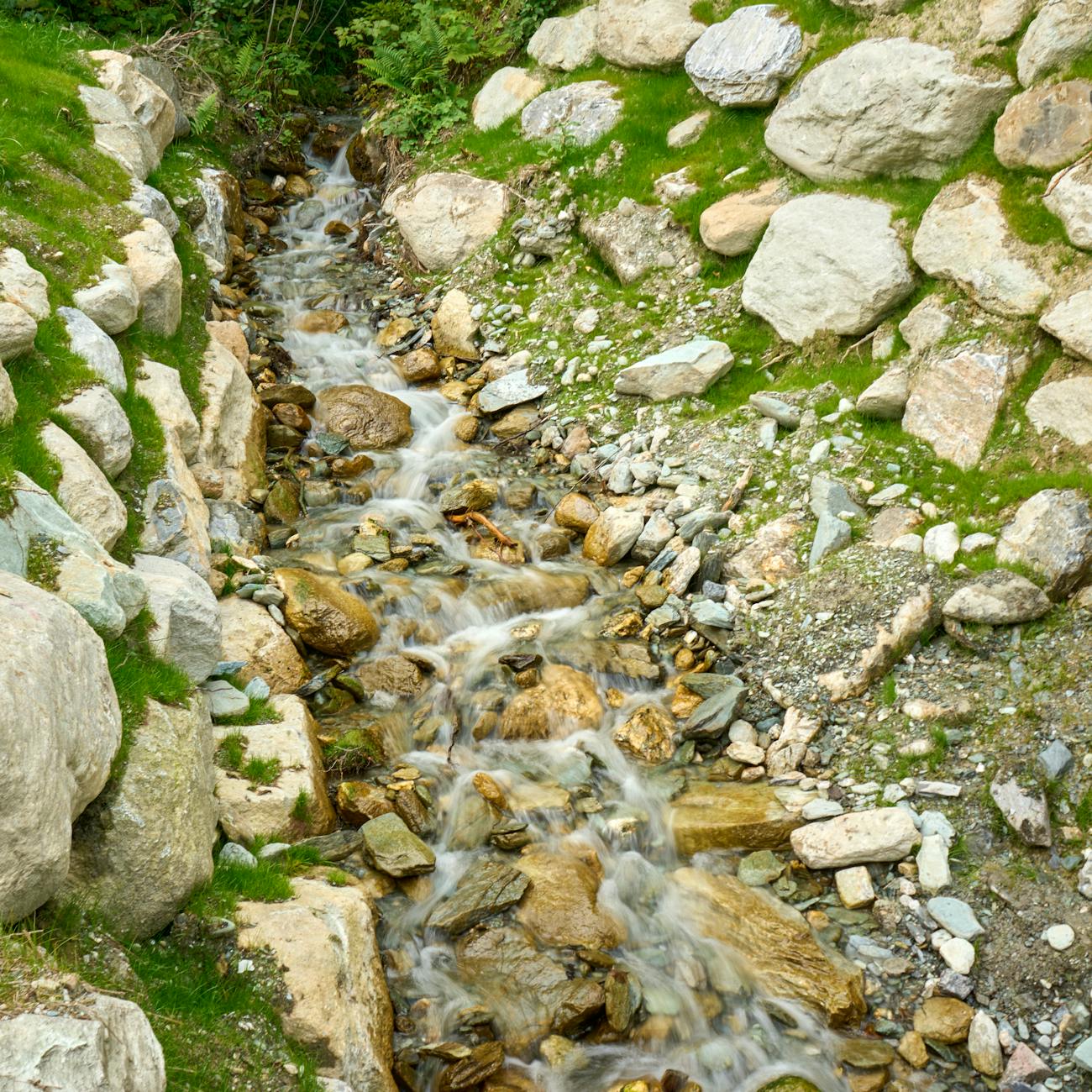
Earth retaining structures (ERS) are engineering constructions used to hold back soil or other materials on slopes or excavations, preventing them from collapsing or moving. These structures play a crucial role in the stability and safety of various civil engineering projects, such as buildings, highways, bridges, and tunnels. In this explanation, we will discuss key terms and vocabulary related to ERS in the context of the Postgraduate Certificate in Geotechnical Engineering & Soil Mechanics.
1. Retaining Wall: A retaining wall is a structure designed to hold back soil or other materials on one side, while allowing for development or transportation infrastructure on the other side. Retaining walls can be made of various materials, including concrete, masonry, timber, and steel. 2. Slope Stability: Slope stability refers to the resistance of a slope to sliding or collapsing. Factors that affect slope stability include the angle of the slope, soil properties, water content, and the presence of any structural elements. 3. Soil Mechanics: Soil mechanics is the study of the behavior of soils under various conditions, including their physical and chemical properties. Understanding soil mechanics is crucial for designing effective ERS, as it helps engineers predict the behavior of soil under different loads and stresses. 4. Passive Earth Pressure: Passive earth pressure is the force exerted by soil on a retaining wall when the soil is stationary or moving away from the wall. This force is typically greater than the force exerted when the soil is moving towards the wall, known as active earth pressure. 5. Active Earth Pressure: Active earth pressure is the force exerted by soil on a retaining wall when the soil is moving towards the wall. This force is typically less than the force exerted when the soil is stationary or moving away from the wall, known as passive earth pressure. 6. Rankine's Theory: Rankine's theory is a method for calculating the active and passive earth pressures on a retaining wall. It assumes that the soil is a homogeneous and isotropic material, and that the wall is a vertical plane. 7. Cantilever Wall: A cantilever wall is a type of retaining wall that is supported at only one end. The wall is typically made of reinforced concrete, and its design allows it to resist the forces exerted by the soil. 8. Gravity Wall: A gravity wall is a type of retaining wall that relies on its own weight to resist the forces exerted by the soil. These walls are typically made of concrete, masonry, or stone, and are often used for low retaining walls. 9. Anchored Wall: An anchored wall is a type of retaining wall that is supported by cables or anchors that are embedded in the soil. These anchors help to resist the forces exerted by the soil, allowing for taller and more slender walls. 10. Sheeting: Sheeting is a type of retaining wall that is made of thin, flexible sheets of material, such as steel or plastic. These sheets are driven into the soil to form a barrier that resists the forces exerted by the soil. 11. Tieback Wall: A tieback wall is a type of retaining wall that is supported by cables or anchors that are located behind the wall. These anchors help to resist the forces exerted by the soil, allowing for taller and more slender walls. 12. Battered Wall: A battered wall is a type of retaining wall that is inclined at an angle, rather than being vertical. This design helps to resist the forces exerted by the soil, making it more stable and durable. 13. Surcharge Load: A surcharge load is an additional load that is placed on top of a retaining wall, such as a pile of soil or a building. This load can increase the forces exerted on the wall, making it more likely to fail. 14. Factor of Safety: The factor of safety is a measure of the safety of a retaining wall, calculated by dividing the wall's capacity by the expected loads. A factor of safety greater than 1.0 indicates that the wall is safe, while a factor of safety less than 1.0 indicates that the wall is at risk of failure. 15. Global Stability: Global stability refers to the stability of the entire slope or excavation, rather than just the retaining wall. Factors that affect global stability include the slope geometry, soil properties, and any structural elements.
Examples:
* A gravity wall made of concrete is used to retain soil on a slope, allowing for the construction of a building on the other side. * An anchored wall is used to retain soil on an excavation site, allowing for the construction of a basement.
Practical Applications:
* Understanding the different types of retaining walls and their properties is crucial for engineers designing ERS for various projects. * Calculating the active and passive earth pressures on a retaining wall is essential for ensuring its stability and safety.
Challenges:
* Predicting the behavior of soil under different loads and stresses can be difficult, requiring complex calculations and simulations. * Ensuring the stability and safety of tall and slender retaining walls can be challenging, requiring careful design and construction.
In conclusion, Earth retaining structures are an essential part of civil engineering projects, and understanding the key terms and vocabulary related to them is crucial for engineers designing and constructing these structures. By understanding the properties of different types of retaining walls, calculating the forces exerted by the soil, and ensuring the stability and safety of the structures, engineers can help ensure the success and safety of various projects.
Key takeaways
- Earth retaining structures (ERS) are engineering constructions used to hold back soil or other materials on slopes or excavations, preventing them from collapsing or moving.
- Retaining Wall: A retaining wall is a structure designed to hold back soil or other materials on one side, while allowing for development or transportation infrastructure on the other side.
- * A gravity wall made of concrete is used to retain soil on a slope, allowing for the construction of a building on the other side.
- * Understanding the different types of retaining walls and their properties is crucial for engineers designing ERS for various projects.
- * Predicting the behavior of soil under different loads and stresses can be difficult, requiring complex calculations and simulations.
- In conclusion, Earth retaining structures are an essential part of civil engineering projects, and understanding the key terms and vocabulary related to them is crucial for engineers designing and constructing these structures.