
Machine Learning for Gynecological Diagnosis
Machine Learning is a subset of artificial intelligence that focuses on the development of algorithms and statistical models that enable computers to learn and improve from experience without being explicitly programmed. In the context of g…
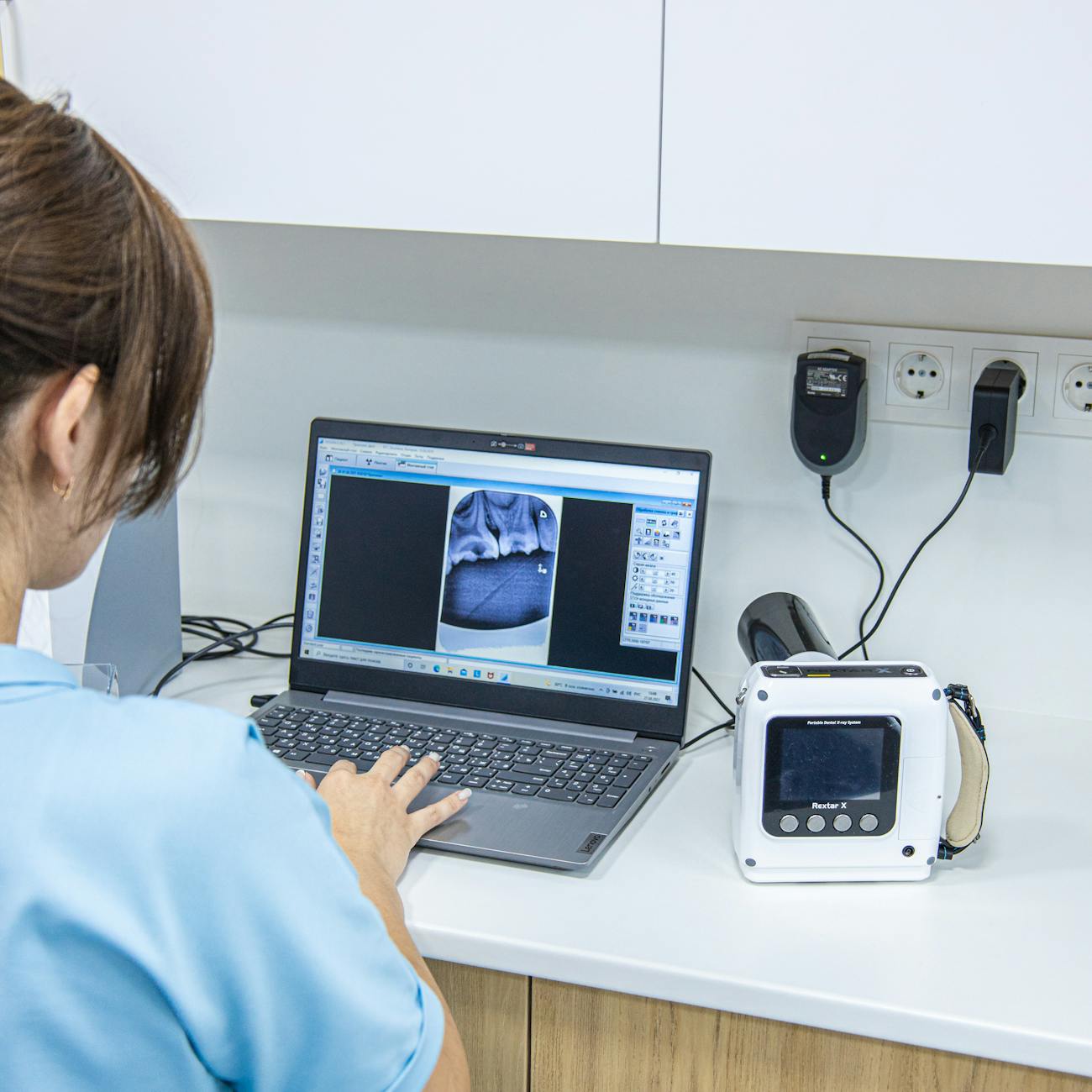
Machine Learning is a subset of artificial intelligence that focuses on the development of algorithms and statistical models that enable computers to learn and improve from experience without being explicitly programmed. In the context of gynecological diagnosis, machine learning algorithms can be trained to analyze medical data and assist healthcare providers in making accurate and timely diagnoses.
Gynecological Diagnosis refers to the process of identifying and treating conditions related to the female reproductive system. This can include diagnosing issues such as cervical cancer, ovarian cysts, endometriosis, and other gynecological disorders. Machine learning can play a crucial role in improving the accuracy and efficiency of these diagnoses by analyzing medical images, patient records, and other relevant data.
Artificial Intelligence (AI) is a broad field of computer science that focuses on creating intelligent machines capable of performing tasks that typically require human intelligence. Machine learning is a subset of AI that specifically deals with algorithms and statistical models.
Algorithm is a set of rules or instructions that a computer follows to solve a problem or perform a task. In the context of machine learning, algorithms are used to analyze data, identify patterns, and make predictions based on the input provided.
Statistical Models are mathematical representations of relationships between variables in a dataset. These models are used in machine learning to analyze data, make predictions, and identify patterns that can be used to improve decision-making.
Healthcare refers to the maintenance or improvement of health through the prevention, diagnosis, treatment, and recovery of illness, injury, and other physical and mental impairments. Machine learning has the potential to revolutionize healthcare by improving diagnosis accuracy, predicting patient outcomes, and personalizing treatment plans.
Data is the raw information that is used as input for machine learning algorithms. In the context of gynecological diagnosis, data can include medical images, patient records, lab results, and other relevant information that can be used to train algorithms and make predictions.
Training is the process of teaching a machine learning algorithm to recognize patterns and make predictions based on a labeled dataset. During training, the algorithm adjusts its parameters to minimize errors and improve its performance on new data.
Testing is the process of evaluating the performance of a machine learning algorithm on unseen data. Testing helps assess the algorithm's ability to generalize to new cases and provides insights into its accuracy and robustness.
Supervised Learning is a type of machine learning where the algorithm is trained on a labeled dataset, meaning that each data point is associated with a specific outcome. Supervised learning is commonly used in gynecological diagnosis to predict patient outcomes based on historical data.
Unsupervised Learning is a type of machine learning where the algorithm learns patterns and relationships in data without being explicitly told the correct output. Unsupervised learning can be used to cluster similar patient profiles, identify anomalies in medical images, and discover hidden patterns in healthcare data.
Deep Learning is a subset of machine learning that uses artificial neural networks with multiple layers to learn complex patterns in data. Deep learning has shown promising results in image analysis, natural language processing, and other healthcare applications.
Neural Networks are computational models inspired by the structure and function of the human brain. In deep learning, neural networks are used to learn hierarchical representations of data by passing information through multiple layers of interconnected nodes.
Feature Extraction is the process of identifying and selecting relevant features or attributes from raw data. In the context of gynecological diagnosis, feature extraction can involve extracting key information from medical images, patient records, and other sources to improve the performance of machine learning algorithms.
Classification is a type of machine learning task where the goal is to categorize data points into predefined classes or categories. In gynecological diagnosis, classification algorithms can be used to predict whether a patient has a specific condition based on their symptoms, medical history, and other factors.
Regression is a type of machine learning task where the goal is to predict a continuous value or outcome based on input data. Regression algorithms can be used in gynecological diagnosis to predict patient outcomes, estimate treatment effectiveness, and identify risk factors for certain conditions.
Clustering is a type of unsupervised learning task where the goal is to group similar data points together based on their characteristics. Clustering algorithms can be used to identify patient subgroups, segment medical images, and discover patterns in healthcare data.
Anomaly Detection is a type of machine learning task where the goal is to identify unusual or abnormal data points that deviate from the norm. Anomaly detection algorithms can be used in gynecological diagnosis to flag suspicious findings in medical images, patient records, and other sources.
Overfitting occurs when a machine learning algorithm performs well on the training data but fails to generalize to new, unseen data. Overfitting can lead to poor performance and inaccurate predictions, so it is important to use techniques such as cross-validation, regularization, and feature selection to prevent overfitting.
Underfitting occurs when a machine learning algorithm is too simple to capture the underlying patterns in the data. Underfitting can result in poor performance and low accuracy, so it is essential to use more complex models, increase the amount of training data, or fine-tune hyperparameters to address underfitting.
Hyperparameters are settings or configurations that are not learned by the machine learning algorithm but need to be specified by the user. Hyperparameters can affect the performance of the algorithm and influence its ability to learn from data, so tuning hyperparameters is essential to optimize model performance.
Cross-Validation is a technique used to assess the performance of a machine learning algorithm by splitting the data into multiple subsets, training the model on some subsets, and testing it on others. Cross-validation helps evaluate the algorithm's ability to generalize to new data and provides insights into its accuracy and robustness.
Validation Set is a subset of the data that is used to evaluate the performance of a machine learning algorithm during training. The validation set helps assess the model's ability to generalize to new cases and provides feedback on its accuracy and generalization capabilities.
Test Set is a subset of the data that is used to evaluate the final performance of a machine learning algorithm after training is complete. The test set helps assess the algorithm's ability to make accurate predictions on new, unseen data and provides insights into its overall performance and robustness.
Accuracy is a metric used to measure the performance of a machine learning algorithm by calculating the percentage of correct predictions it makes on the test data. Accuracy is a fundamental evaluation metric for classification tasks in gynecological diagnosis and can help assess the algorithm's ability to make accurate diagnoses.
Precision is a metric used to measure the proportion of true positive predictions out of all positive predictions made by a machine learning algorithm. Precision is important in gynecological diagnosis to evaluate the algorithm's ability to correctly identify patients with a specific condition and minimize false positives.
Recall is a metric used to measure the proportion of true positive predictions out of all actual positive cases in the data. Recall is crucial in gynecological diagnosis to assess the algorithm's ability to correctly identify patients with a specific condition and minimize false negatives.
F1 Score is a metric that combines precision and recall into a single value to provide a balanced measure of a machine learning algorithm's performance. The F1 score is commonly used in gynecological diagnosis to evaluate the algorithm's ability to make accurate predictions while considering both false positives and false negatives.
Confusion Matrix is a table that visualizes the performance of a machine learning algorithm by showing the number of true positive, true negative, false positive, and false negative predictions it makes on the test data. Confusion matrices are useful in gynecological diagnosis to assess the algorithm's accuracy, precision, recall, and F1 score.
Feature Importance is a measure of the contribution of each feature or attribute in a dataset to the predictive power of a machine learning algorithm. Feature importance can help identify key factors that influence gynecological diagnoses, prioritize features for analysis, and improve model interpretability.
Model Interpretability is the ability to explain how a machine learning algorithm makes predictions and provide insights into the factors that influence its decisions. In gynecological diagnosis, model interpretability is crucial for healthcare providers to understand the rationale behind algorithmic recommendations and trust the accuracy of the diagnoses.
Transfer Learning is a machine learning technique where a model trained on one task or dataset is adapted to another related task or dataset. Transfer learning can be used in gynecological diagnosis to leverage pre-trained models, reduce the amount of training data needed, and improve the performance of new algorithms.
Data Preprocessing is the process of cleaning, transforming, and preparing raw data for analysis by machine learning algorithms. Data preprocessing is essential in gynecological diagnosis to handle missing values, normalize data, encode categorical variables, and ensure the quality and consistency of the input data.
Imbalanced Data occurs when one class or category in a dataset is significantly more prevalent than others, leading to biased predictions and poor model performance. Dealing with imbalanced data is a common challenge in gynecological diagnosis that requires techniques such as oversampling, undersampling, and data augmentation to address.
Medical Imaging refers to the use of various imaging techniques such as X-rays, ultrasounds, MRIs, and CT scans to visualize internal structures and organs in the body. Machine learning algorithms can analyze medical images to assist in gynecological diagnoses, detect abnormalities, and predict patient outcomes.
Electronic Health Records (EHR) are digital versions of patients' medical records that contain information about their medical history, diagnoses, treatments, lab results, and other healthcare-related data. Machine learning algorithms can analyze EHR data to assist healthcare providers in making accurate gynecological diagnoses, predicting patient outcomes, and personalizing treatment plans.
Natural Language Processing (NLP) is a branch of artificial intelligence that focuses on understanding and processing human language. NLP techniques can be used in gynecological diagnosis to analyze textual data such as patient notes, medical reports, and research articles, extract key information, and assist in decision-making.
Challenges in Machine Learning for Gynecological Diagnosis include data privacy concerns, ethical considerations, interpretability of algorithms, data quality issues, imbalanced data, and regulatory compliance. Overcoming these challenges requires collaboration between healthcare providers, data scientists, policymakers, and other stakeholders to ensure the responsible and ethical use of machine learning in healthcare.
Practical Applications of Machine Learning in Gynecological Diagnosis include early detection of gynecological cancers, personalized treatment plans, predictive analytics for patient outcomes, image analysis for abnormal findings, risk assessment for certain conditions, and automated decision support systems for healthcare providers. Machine learning has the potential to revolutionize gynecological diagnosis by improving accuracy, efficiency, and patient outcomes.
In conclusion, Machine Learning plays a crucial role in Gynecological Diagnosis by enabling healthcare providers to analyze medical data, make accurate predictions, and personalize treatment plans. Understanding key terms and concepts in Machine Learning such as algorithms, supervised learning, deep learning, feature extraction, and model interpretability is essential for leveraging the power of AI technologies in gynecology. By overcoming challenges, applying practical applications, and embracing ethical considerations, machine learning has the potential to transform the field of gynecological diagnosis and improve healthcare outcomes for patients worldwide.
Key takeaways
- Machine Learning is a subset of artificial intelligence that focuses on the development of algorithms and statistical models that enable computers to learn and improve from experience without being explicitly programmed.
- Machine learning can play a crucial role in improving the accuracy and efficiency of these diagnoses by analyzing medical images, patient records, and other relevant data.
- Artificial Intelligence (AI) is a broad field of computer science that focuses on creating intelligent machines capable of performing tasks that typically require human intelligence.
- In the context of machine learning, algorithms are used to analyze data, identify patterns, and make predictions based on the input provided.
- These models are used in machine learning to analyze data, make predictions, and identify patterns that can be used to improve decision-making.
- Healthcare refers to the maintenance or improvement of health through the prevention, diagnosis, treatment, and recovery of illness, injury, and other physical and mental impairments.
- In the context of gynecological diagnosis, data can include medical images, patient records, lab results, and other relevant information that can be used to train algorithms and make predictions.