
Surgical Procedures and Techniques
Expert-defined terms from the Certificate in Surgical Technology course at London School of Planning and Management. Free to read, free to share, paired with a professional course.
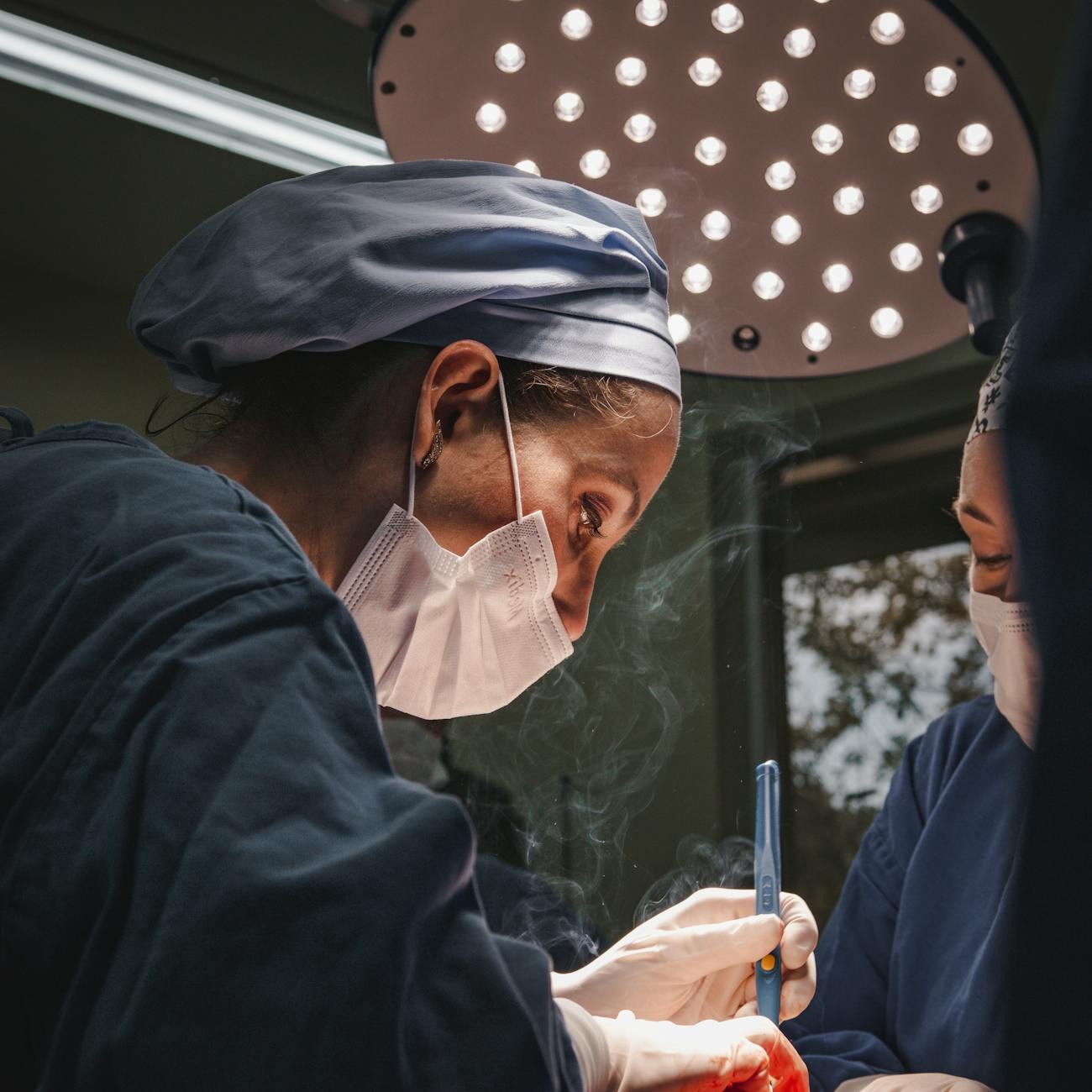
Surgical Procedures and Techniques Glossary #
Surgical Procedures and Techniques Glossary
A #
A
Anesthesia #
A state of controlled unconsciousness or sedation induced for a surgical procedure to eliminate pain and discomfort.
Arthroscopy #
A minimally invasive surgical procedure where a small camera is inserted into a joint to diagnose and treat issues like torn ligaments or cartilage.
B #
B
Bilateral #
A surgical procedure that involves both sides of the body or organ simultaneously.
Blood Transfusion #
The process of transferring blood or blood products into a patient's bloodstream to replace lost blood during surgery.
C #
C
Caesarean Section (C #
Section): A surgical procedure to deliver a baby through an incision made in the mother's abdomen and uterus.
Cardiopulmonary Bypass (CPB) #
A technique used during open-heart surgery to divert blood away from the heart and lungs for oxygenation and circulation.
Cholecystectomy #
Surgical removal of the gallbladder, often performed to treat gallstones.
D #
D
Debridement #
The surgical removal of dead, damaged, or infected tissue to promote healing.
Dissection #
The careful separation and cutting of tissues during a surgical procedure.
E #
E
Electrocautery #
The use of an electrical current to cut or coagulate tissue during surgery.
Endoscopy #
A minimally invasive procedure that uses a flexible tube with a light and camera to visualize internal organs.
Excision #
The surgical removal of tissue or an organ from the body.
F #
F
Flap Surgery #
A technique that involves moving tissue from one part of the body to another with its blood supply intact.
Full Thickness #
A surgical incision that goes through all layers of tissue.
G #
G
Graft #
Tissue or organ transplanted from one part of the body to another or from a donor to a recipient.
H #
H
Hemostasis #
The process of stopping bleeding during surgery.
I #
I
Incision #
A cut made in the skin or tissue during a surgical procedure.
Incision and Drainage (I&D) #
A procedure to drain pus or fluid from an abscess or wound.
J #
J
Joint Replacement #
Surgical procedure to replace a damaged joint with an artificial implant.
K #
K
Kidney Transplant #
Surgical procedure to implant a healthy kidney from a donor into a recipient with kidney failure.
L #
L
Laparoscopy #
A minimally invasive surgical procedure where a camera is inserted through small incisions in the abdomen to perform surgery.
Ligation #
The surgical tying off of a blood vessel or duct to prevent bleeding or leakage.
M #
M
Microsurgery #
Surgical procedures performed under a microscope to repair small structures like nerves and blood vessels.
N #
N
Neurosurgery #
Surgical specialty focused on the treatment of conditions affecting the brain, spinal cord, and nerves.
O #
O
Open Surgery #
Traditional surgical procedures that involve a large incision to access internal organs.
P #
P
Prosthesis #
Artificial device used to replace a missing body part or function.
Q #
Q
Quadrantectomy #
Surgical procedure to remove one-fourth of a breast affected by cancer.
R #
R
Reconstructive Surgery #
Surgical procedures to restore the form and function of damaged or missing body parts.
S #
S
Sterilization #
Surgical procedure to permanently prevent pregnancy by blocking or cutting the fallopian tubes.
Stitch #
A surgical suture used to close an incision or wound.
T #
T
Thoracotomy #
Surgical incision into the chest to access the lungs, heart, or other thoracic organs.
Transplantation #
Surgical procedure to implant an organ or tissue from a donor into a recipient.
U #
U
Ultrasound #
Guided Surgery: Surgical procedures performed with the assistance of ultrasound imaging for precise visualization.
V #
V
Vasectomy #
Surgical procedure to block or cut the vas deferens for permanent male sterilization.
W #
W
Wound Care #
The management and treatment of surgical incisions or wounds to promote healing and prevent infection.
Abdominal Surgery #
A type of surgical procedure that involves operations on the organs within the abdomen, such as the stomach, liver, intestines, and gallbladder.
Anesthesia #
The process of administering medications to induce a state of unconsciousness, pain relief, and muscle relaxation during surgery. There are different types of anesthesia, including general anesthesia, regional anesthesia, and local anesthesia.
Anesthesiologist #
A medical doctor who specializes in administering anesthesia and managing the patient's vital signs during surgery.
Arthroscopy #
A minimally invasive surgical procedure that allows surgeons to visualize, diagnose, and treat problems inside a joint using a small camera called an arthroscope.
Blood Loss #
The amount of blood lost during surgery, which can vary depending on the type of procedure and the patient's health status. Excessive blood loss can lead to complications such as anemia and hypovolemic shock.
Cardiothoracic Surgery #
A surgical specialty that focuses on operating on the heart, lungs, esophagus, and other organs within the chest cavity.
Circulating Nurse #
A registered nurse who coordinates and manages the operating room during surgery, ensuring that all equipment and supplies are available and that the surgical team follows proper protocols.
Colonoscopy #
A procedure that allows doctors to examine the inside of the colon using a flexible tube with a camera attached to it. Colonoscopy is commonly used for screening and diagnosing conditions such as colorectal cancer.
Craniotomy #
A surgical procedure that involves opening the skull to access the brain for diagnostic or therapeutic purposes.
Diagnostic Laparoscopy #
A minimally invasive procedure that allows surgeons to examine the abdominal organs using a laparoscope, a thin tube with a camera and light source.
Electrocautery #
A surgical technique that uses electrical current to cut, coagulate, or seal blood vessels during surgery, reducing bleeding and improving visibility.
Endoscopic Surgery #
A minimally invasive surgical approach that involves using an endoscope, a flexible tube with a camera and light source, to visualize and operate on internal organs.
Exploratory Surgery #
A procedure performed to investigate the cause of symptoms or abnormalities that cannot be diagnosed through non-invasive methods.
Hemostasis #
The process of controlling or stopping bleeding during surgery, typically achieved through techniques such as suturing, cauterization, and the use of hemostatic agents.
Hernia Repair #
A surgical procedure to repair a hernia, a protrusion of an organ through a weak spot in the abdominal wall. Hernia repair can be performed using open surgery or minimally invasive techniques such as laparoscopy.
Infection Control #
The practices and protocols implemented to prevent the spread of infections in healthcare settings, including proper hand hygiene, sterilization of equipment, and use of personal protective equipment.
Laparoscopic Cholecystectomy #
A minimally invasive surgical procedure to remove the gallbladder using a laparoscope and specialized instruments. Laparoscopic cholecystectomy is commonly performed for the treatment of gallstones.
Malignant Tumor #
A cancerous growth that has the potential to invade and spread to other parts of the body, requiring surgical removal and additional treatments such as chemotherapy and radiation therapy.
Neurosurgery #
A surgical specialty that focuses on treating conditions affecting the brain, spinal cord, and nervous system, including tumors, trauma, and degenerative diseases.
Operating Room Technician #
A healthcare professional who assists surgeons and nurses in the operating room by preparing equipment, sterilizing instruments, and providing support during surgical procedures.
Orthopedic Surgery #
A surgical specialty that focuses on treating musculoskeletal conditions such as fractures, arthritis, and sports injuries through surgical interventions such as joint replacement and repair.
Postoperative Care #
The monitoring and management of patients after surgery to ensure proper healing, pain control, and prevention of complications. Postoperative care may involve wound care, medication administration, and rehabilitation.
Preoperative Assessment #
The evaluation of a patient's health status before surgery to identify any risk factors, allergies, or medical conditions that may impact the surgical procedure or anesthesia.
Reconstructive Surgery #
A type of surgery that aims to restore function and appearance to damaged or abnormal body structures, often performed following trauma, cancer treatment, or congenital deformities.
Retractors #
Surgical instruments used to hold back tissues and organs during surgical procedures, providing the surgeon with better visibility and access to the surgical site.
Robotic Surgery #
A minimally invasive surgical technique that uses robotic arms controlled by a surgeon to perform precise and complex maneuvers with enhanced dexterity and visualization.
Sterilization Techniques #
Methods used to eliminate all microorganisms from surgical instruments, equipment, and surfaces to prevent infections in patients undergoing surgery. Common sterilization techniques include autoclaving, chemical disinfection, and ethylene oxide gas sterilization.
Suture Materials #
Threads or wires used to stitch and close surgical incisions, wounds, and tissues during procedures. Suture materials vary in material, size, and absorbability, depending on the surgical application.
Thoracotomy #
A surgical incision made in the chest wall to access the lungs, heart, esophagus, or other structures within the thoracic cavity for diagnostic or therapeutic purposes.
Transplant Surgery #
A specialized field of surgery that involves the transplantation of organs or tissues from a donor to a recipient to treat end-stage organ failure or genetic disorders.
Vascular Surgery #
A surgical specialty that focuses on treating conditions affecting the blood vessels, such as aneurysms, peripheral artery disease, and venous insufficiency, through surgical interventions and endovascular procedures.
Wound Healing #
The process of repair and regeneration of damaged tissues following surgery, involving inflammation, proliferation, and remodeling stages to restore the integrity of the skin and underlying structures.
Xenon Light Source #
A high-intensity light source used in surgical procedures to provide bright, white light for visualization of the surgical field, enhancing the surgeon's ability to perform precise maneuvers and identify anatomical structures.
Yankauer Suction #
A handheld suction device used during surgery to remove blood, fluids, and debris from the surgical site, maintaining a clear field of view for the surgeon and preventing contamination.