
Introduction to Artificial Intelligence in Physiotherapy Rehabilitation
Expert-defined terms from the Professional Certificate in AI in Physiotherapy Rehabilitation course at London School of Planning and Management. Free to read, free to share, paired with a professional course.
Introduction to Artificial Intelligence in Physiotherapy Rehabilitation Gloss… #
Introduction to Artificial Intelligence in Physiotherapy Rehabilitation Glossary
Artificial Intelligence (AI) #
Artificial Intelligence (AI)
Artificial Intelligence (AI) refers to the simulation of human intelligence proc… #
AI algorithms can learn from data, adapt to new inputs, and perform tasks that would typically require human intelligence, such as visual perception, speech recognition, decision-making, and language translation.
Physiotherapy Rehabilitation #
Physiotherapy Rehabilitation
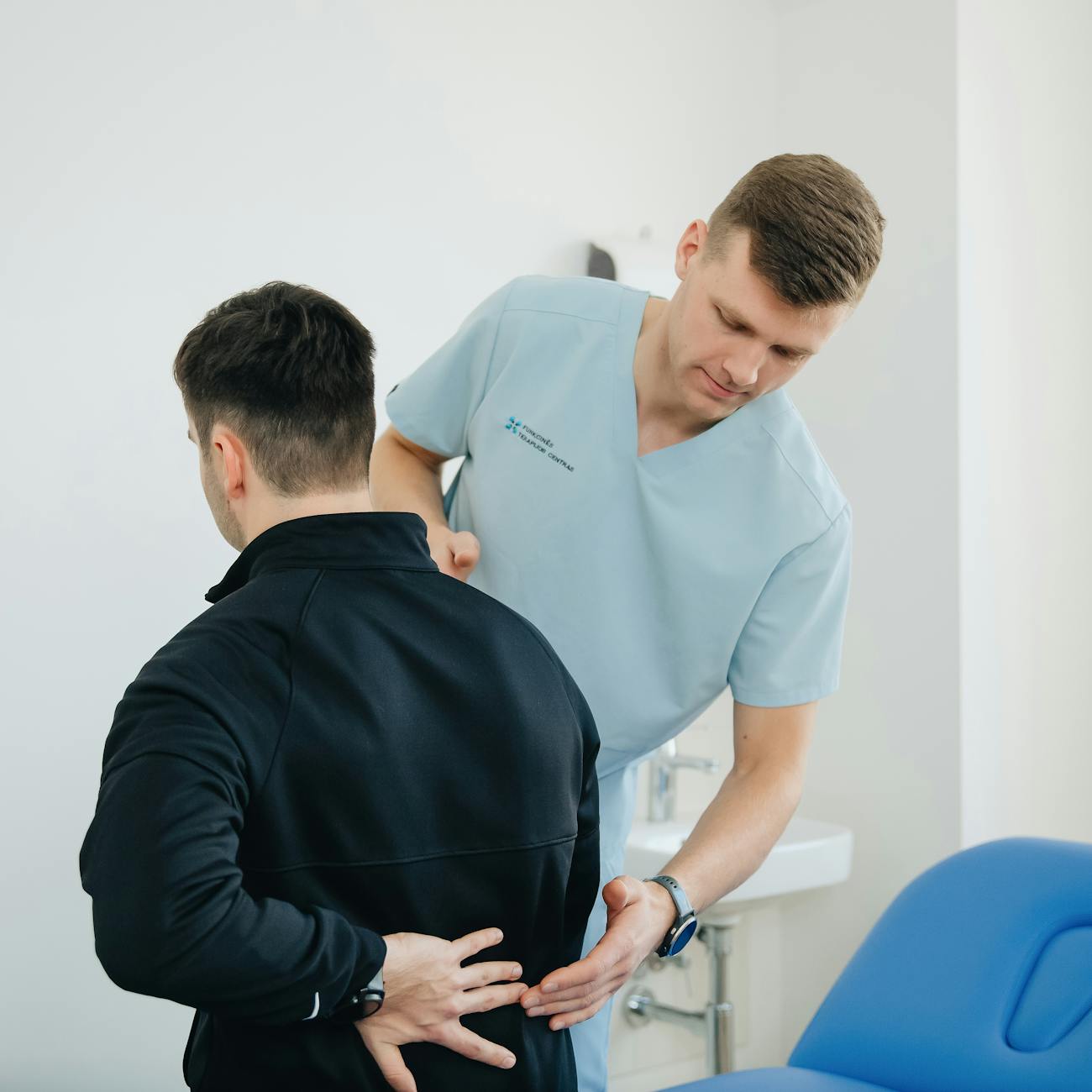
Physiotherapy Rehabilitation involves the use of physical methods such as exerci… #
Physiotherapists work with patients to improve their physical well-being through targeted interventions and personalized treatment plans.
Professional Certificate in AI in Physiotherapy Rehabilitation #
Professional Certificate in AI in Physiotherapy Rehabilitation
The Professional Certificate in AI in Physiotherapy Rehabilitation is a speciali… #
The certificate program covers topics such as machine learning, data analysis, and AI applications in physiotherapy rehabilitation.
Algorithm #
Algorithm
An algorithm is a set of step #
by-step instructions designed to solve a specific problem or perform a particular task. In the context of artificial intelligence, algorithms are used to process data, make predictions, and optimize outcomes. Examples of AI algorithms include decision trees, neural networks, and support vector machines.
Data Analysis #
Data Analysis
Data analysis involves the process of inspecting, cleansing, transforming, and m… #
In the field of physiotherapy rehabilitation, data analysis plays a crucial role in understanding patient outcomes, identifying trends, and optimizing treatment protocols.
Machine Learning #
Machine Learning
Machine Learning is a subset of artificial intelligence that focuses on developi… #
Machine learning algorithms can identify patterns, make decisions, and improve performance over time without being explicitly programmed.
Deep Learning #
Deep Learning
Deep Learning is a type of machine learning that uses neural networks with multi… #
Deep learning algorithms are capable of automatically learning representations of data through a hierarchical process, making them well-suited for tasks such as image recognition and natural language processing.
Neural Networks #
Neural Networks
Neural Networks are a type of artificial intelligence model inspired by the stru… #
Neural networks consist of interconnected nodes, or neurons, that process input data and transmit signals through layers of computation. This architecture allows neural networks to learn complex patterns and relationships in data.
Supervised Learning #
Supervised Learning
Supervised Learning is a machine learning technique in which an algorithm learns… #
During training, the algorithm is provided with input-output pairs, allowing it to map input features to the correct output. Supervised learning is commonly used in tasks such as classification and regression.
Unsupervised Learning #
Unsupervised Learning
Unsupervised Learning is a machine learning technique in which an algorithm lear… #
Unlike supervised learning, unsupervised learning does not require labeled output during training, making it suitable for tasks such as clustering, dimensionality reduction, and anomaly detection.
Reinforcement Learning #
Reinforcement Learning
Reinforcement Learning is a machine learning paradigm in which an agent learns t… #
The goal of reinforcement learning is to maximize cumulative rewards over time by learning an optimal policy for action selection.
Feature Engineering #
Feature Engineering
Feature Engineering is the process of selecting, extracting, or transforming inp… #
Effective feature engineering can enhance the predictive power of models, reduce overfitting, and increase interpretability. Examples of feature engineering techniques include one-hot encoding, scaling, and dimensionality reduction.
Model Evaluation #
Model Evaluation
Model Evaluation involves assessing the performance of a machine learning model… #
Common metrics used for model evaluation include accuracy, precision, recall, F1 score, and area under the curve (AUC). Model evaluation helps determine the effectiveness of a model and identify areas for improvement.
Hyperparameter Tuning #
Hyperparameter Tuning
Hyperparameter Tuning is the process of optimizing the hyperparameters of a mach… #
Hyperparameters are parameters that are set before the learning process begins and control the learning process itself. Techniques such as grid search, random search, and Bayesian optimization can be used for hyperparameter tuning.
Overfitting #
Overfitting
Overfitting occurs when a machine learning model learns the noise and fluctuatio… #
Overfitting can be mitigated by techniques such as cross-validation, regularization, and early stopping, which help prevent the model from memorizing the training data.
Underfitting #
Underfitting
Underfitting occurs when a machine learning model is too simple to capture the u… #
Underfitting can be addressed by using more complex models, increasing model capacity, or adding more features to improve performance.
Transfer Learning #
Transfer Learning
Transfer Learning is a machine learning technique that leverages knowledge gaine… #
By transferring learned features or parameters from a pre-trained model, transfer learning can accelerate model training, reduce data requirements, and enhance generalization to new tasks or domains.
Natural Language Processing (NLP) #
Natural Language Processing (NLP)
Natural Language Processing (NLP) is a subfield of artificial intelligence that… #
NLP techniques are used for tasks such as text classification, sentiment analysis, machine translation, and speech recognition. Examples of NLP algorithms include word embeddings, recurrent neural networks, and transformers.
Computer Vision #
Computer Vision
Computer Vision is a field of artificial intelligence that enables computers to… #
Computer vision algorithms can perform tasks such as object recognition, image segmentation, and object tracking. Examples of computer vision applications include facial recognition, autonomous driving, and medical imaging analysis.
Healthcare Analytics #
Healthcare Analytics
Healthcare Analytics involves the use of data analysis and artificial intelligen… #
In the context of physiotherapy rehabilitation, healthcare analytics can help optimize treatment protocols, improve patient outcomes, and enhance clinical decision-making.
Electronic Health Records (EHR) #
Electronic Health Records (EHR)
Electronic Health Records (EHR) are digital versions of patients' paper charts t… #
EHR systems enable healthcare providers to access, share, and update patient records electronically, improving care coordination and data management.
Predictive Modeling #
Predictive Modeling
Predictive Modeling is a data analysis technique that uses statistical algorithm… #
In the context of physiotherapy rehabilitation, predictive modeling can be used to predict patient recovery, assess treatment effectiveness, and personalize interventions for better outcomes.
Rehabilitation Robotics #
Rehabilitation Robotics
Rehabilitation Robotics involves the use of robotic devices to assist or enhance… #
Robotic rehabilitation devices can provide repetitive, precise, and customizable movements to help patients regain strength, mobility, and function following injury or disability.
Virtual Reality (VR) #
Virtual Reality (VR)
Virtual Reality (VR) is a technology that simulates a realistic three #
dimensional environment to immerse users in a virtual world. In physiotherapy rehabilitation, virtual reality can be used for pain management, motor learning, and functional training. VR-based rehabilitation programs can enhance engagement, motivation, and outcomes for patients.
Augmented Reality (AR) #
Augmented Reality (AR)
Augmented Reality (AR) is a technology that overlays digital information or virt… #
In physiotherapy rehabilitation, augmented reality can be used to provide visual feedback, guidance, and gamification during exercises or activities. AR applications can enhance patient engagement, adherence, and outcomes.
Internet of Things (IoT) #
Internet of Things (IoT)
Internet of Things (IoT) refers to a network of interconnected devices, sensors,… #
In physiotherapy rehabilitation, IoT devices can be used to monitor patient movements, track adherence to treatment plans, and provide real-time feedback to clinicians. IoT technology can improve data collection, analysis, and decision-making in rehabilitation settings.
Challenges and Limitations #
Challenges and Limitations
While artificial intelligence technologies offer significant potential for impro… #
These include issues related to data quality, privacy and security concerns, algorithm bias, interpretability of AI models, regulatory compliance, and ethical considerations. Physiotherapists must be aware of these challenges and work towards overcoming them to maximize the benefits of AI in rehabilitation practice.
Conclusion #
Conclusion
In conclusion, the integration of artificial intelligence technologies in physio… #
By leveraging AI algorithms, machine learning models, and advanced analytics techniques, physiotherapists can enhance patient outcomes, optimize treatment protocols, and deliver personalized care. The Professional Certificate in AI in Physiotherapy Rehabilitation equips physiotherapists with the knowledge and skills necessary to harness the power of AI in their practice, enabling them to stay at the forefront of healthcare innovation and improve the quality of care for their patients.
Artificial Intelligence (AI) #
Artificial Intelligence (AI)
AI refers to the simulation of human intelligence processes by machines, especia… #
It involves tasks such as learning, reasoning, problem-solving, perception, and language understanding. AI is transforming various industries, including healthcare, by improving diagnostic accuracy, treatment planning, and patient outcomes.
Algorithm #
Algorithm
An algorithm is a set of rules or instructions designed to solve a specific prob… #
In AI, algorithms are used to process data, make decisions, and perform tasks. Examples of AI algorithms include decision trees, neural networks, and support vector machines.
Biomechanics #
Biomechanics
Biomechanics is the study of the mechanical aspects of living organisms, includi… #
In physiotherapy rehabilitation, biomechanics is crucial for understanding movement patterns, muscle activation, and joint mechanics to design effective treatment plans.
Chatbot #
Chatbot
A chatbot is a computer program that simulates human conversation through text o… #
In physiotherapy rehabilitation, chatbots can be used to provide information, answer questions, and offer support to patients regarding their treatment plans and progress.
Data Mining #
Data Mining
Data mining is the process of discovering patterns, trends, and insights from la… #
In physiotherapy rehabilitation, data mining techniques can be used to analyze patient outcomes, identify risk factors, and personalize treatment strategies.
Deep Learning #
Deep Learning
Deep learning is a subset of machine learning that uses artificial neural networ… #
It is particularly effective for tasks such as image recognition, natural language processing, and speech recognition in physiotherapy rehabilitation.
Electromyography (EMG) #
Electromyography (EMG)
Electromyography is a technique used to evaluate and record the electrical activ… #
In physiotherapy rehabilitation, EMG is used to assess muscle function, movement patterns, and muscle recruitment strategies during exercises.
Expert System #
Expert System
An expert system is a computer program that emulates the decision #
making ability of a human expert in a specific domain. In physiotherapy rehabilitation, expert systems can provide diagnostic support, treatment recommendations, and outcome predictions based on clinical data.
Internet of Things (IoT) #
Internet of Things (IoT)
The Internet of Things refers to the network of physical devices, vehicles, and… #
In physiotherapy rehabilitation, IoT devices can monitor patient activity, track progress, and provide real-time feedback.
Kinematics #
Kinematics
Kinematics is the branch of mechanics that studies the motion of objects without… #
In physiotherapy rehabilitation, kinematics is used to analyze movement patterns, joint angles, and velocity to assess and improve functional activities.
Machine Learning #
Machine Learning
Machine learning is a subset of AI that enables computers to learn and improve f… #
In physiotherapy rehabilitation, machine learning algorithms can analyze patient data, predict outcomes, and optimize treatment plans.
Neural Network #
Neural Network
A neural network is a computational model inspired by the human brain's structur… #
In physiotherapy rehabilitation, neural networks can be used for tasks such as pattern recognition, movement prediction, and rehabilitation planning based on patient data.
Occupational Therapy #
Occupational Therapy
Occupational therapy is a healthcare profession focused on helping people with p… #
In physiotherapy rehabilitation, occupational therapists work collaboratively with physiotherapists to optimize patient outcomes.
Physical Therapy #
Physical Therapy
Physical therapy, also known as physiotherapy, is a healthcare profession that f… #
In physiotherapy rehabilitation, physical therapists assess, diagnose, and treat patients with musculoskeletal, neurological, or cardiopulmonary conditions.
Quantified Self #
Quantified Self
Quantified self refers to the practice of using technology to track and analyze… #
In physiotherapy rehabilitation, quantified self tools such as activity trackers, mobile apps, and wearable devices can help patients monitor their progress and adherence to treatment plans.
Rehabilitation Engineering #
Rehabilitation Engineering
Rehabilitation engineering is a field that applies engineering principles to des… #
In physiotherapy rehabilitation, rehabilitation engineers collaborate with therapists to create customized solutions for patients' specific needs.
Supervised Learning #
Supervised Learning
Supervised learning is a type of machine learning where the model is trained on… #
In physiotherapy rehabilitation, supervised learning algorithms can be used to predict patient outcomes, classify movement patterns, and optimize treatment protocols.
Telehealth #
Telehealth
Telehealth refers to the delivery of healthcare services remotely using telecomm… #
In physiotherapy rehabilitation, telehealth platforms enable therapists to conduct virtual consultations, monitor patient progress, and provide education and support from a distance.
Virtual Reality (VR) #
Virtual Reality (VR)
Virtual reality is a computer #
generated simulation of a three-dimensional environment that can be interacted with in a seemingly real or physical way. In physiotherapy rehabilitation, VR technology can be used for pain management, motor learning, and functional training to enhance patient engagement and outcomes.
Wearable Technology #
Wearable Technology
Wearable technology refers to electronic devices that can be worn on the body, s… #
In physiotherapy rehabilitation, wearable technology can monitor vital signs, track activity levels, and provide real-time feedback to patients for self-management and adherence to treatment plans.
X #
Ray
X-ray is a type of electromagnetic radiation used to create images of the inside… #
In physiotherapy rehabilitation, X-rays are commonly used to diagnose musculoskeletal injuries, fractures, and joint conditions to guide treatment planning and monitoring.
Yoga Therapy #
Yoga Therapy
Yoga therapy is a holistic approach to healing that combines yoga practices with… #
In physiotherapy rehabilitation, yoga therapy can help patients manage pain, improve flexibility, and enhance relaxation for overall health and wellness.
Zero #
Gravity Treadmill
A zero #
gravity treadmill is a rehabilitation device that uses differential air pressure to support a percentage of the user's body weight, reducing the impact on joints and muscles during walking or running exercises. In physiotherapy rehabilitation, zero-gravity treadmills can be used for gait training, balance exercises, and lower limb strengthening in patients with mobility impairments.